
A cat carrier that fits where you are actually going
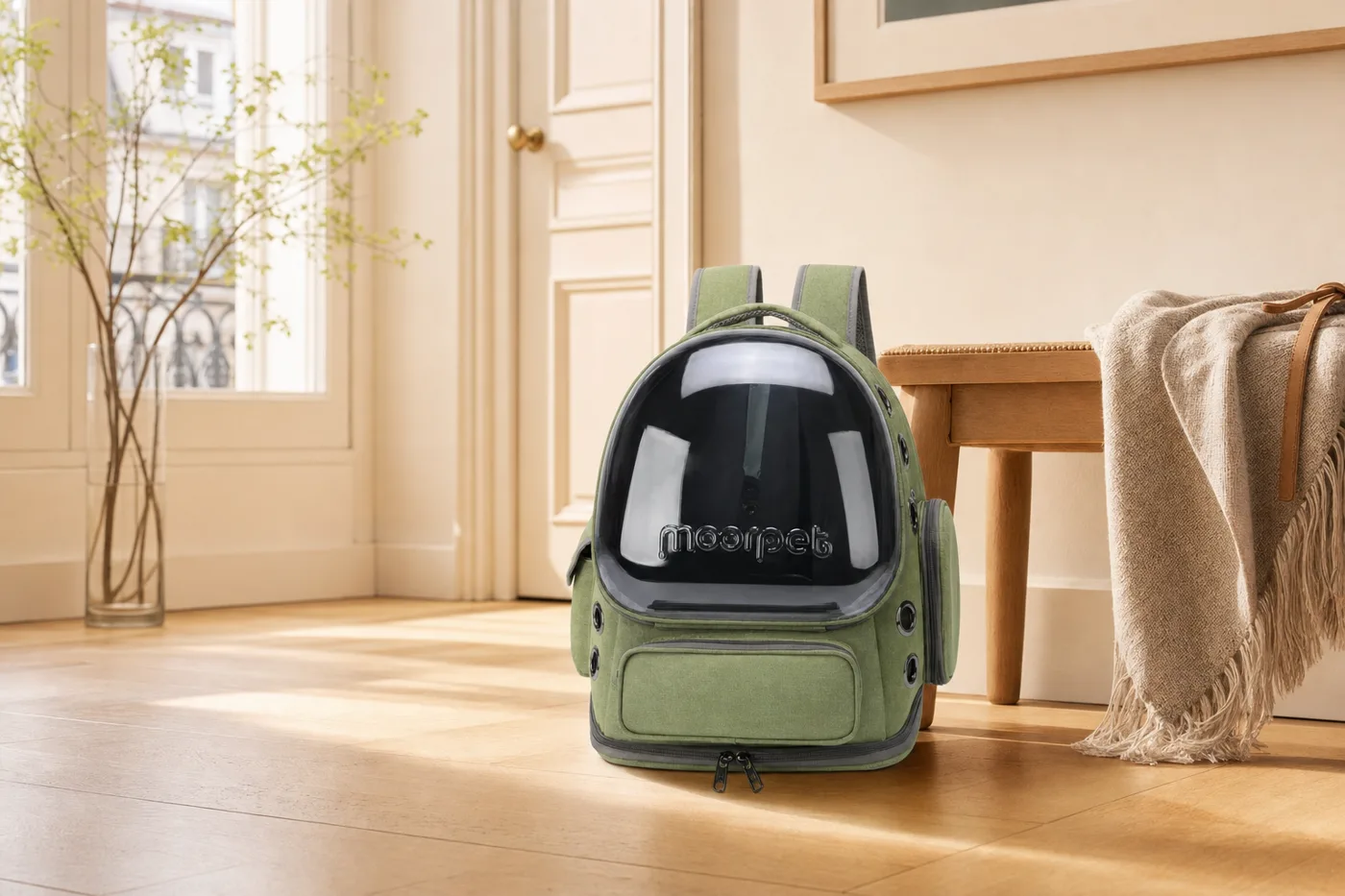
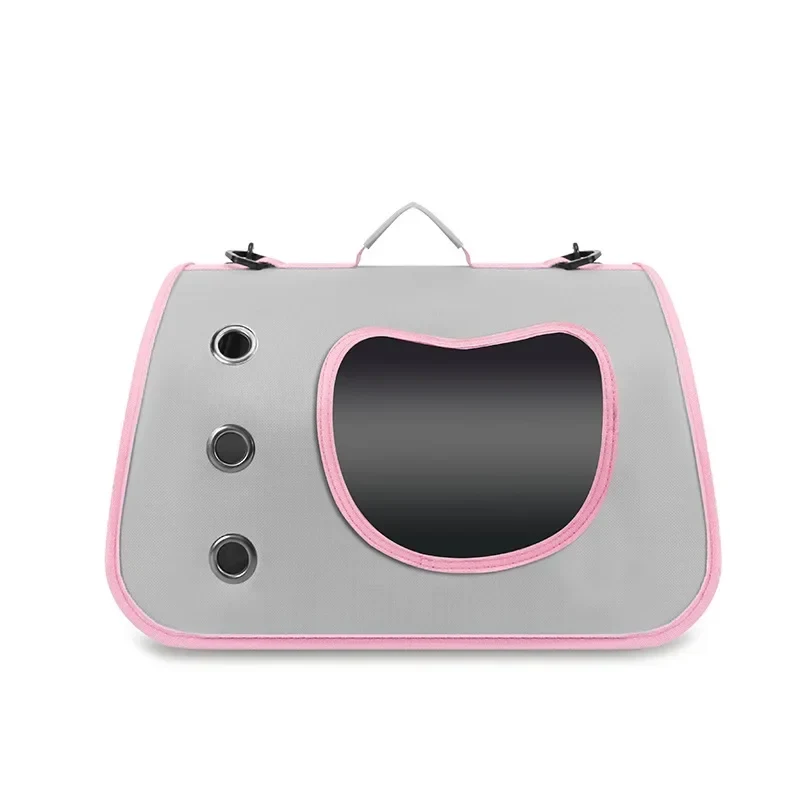
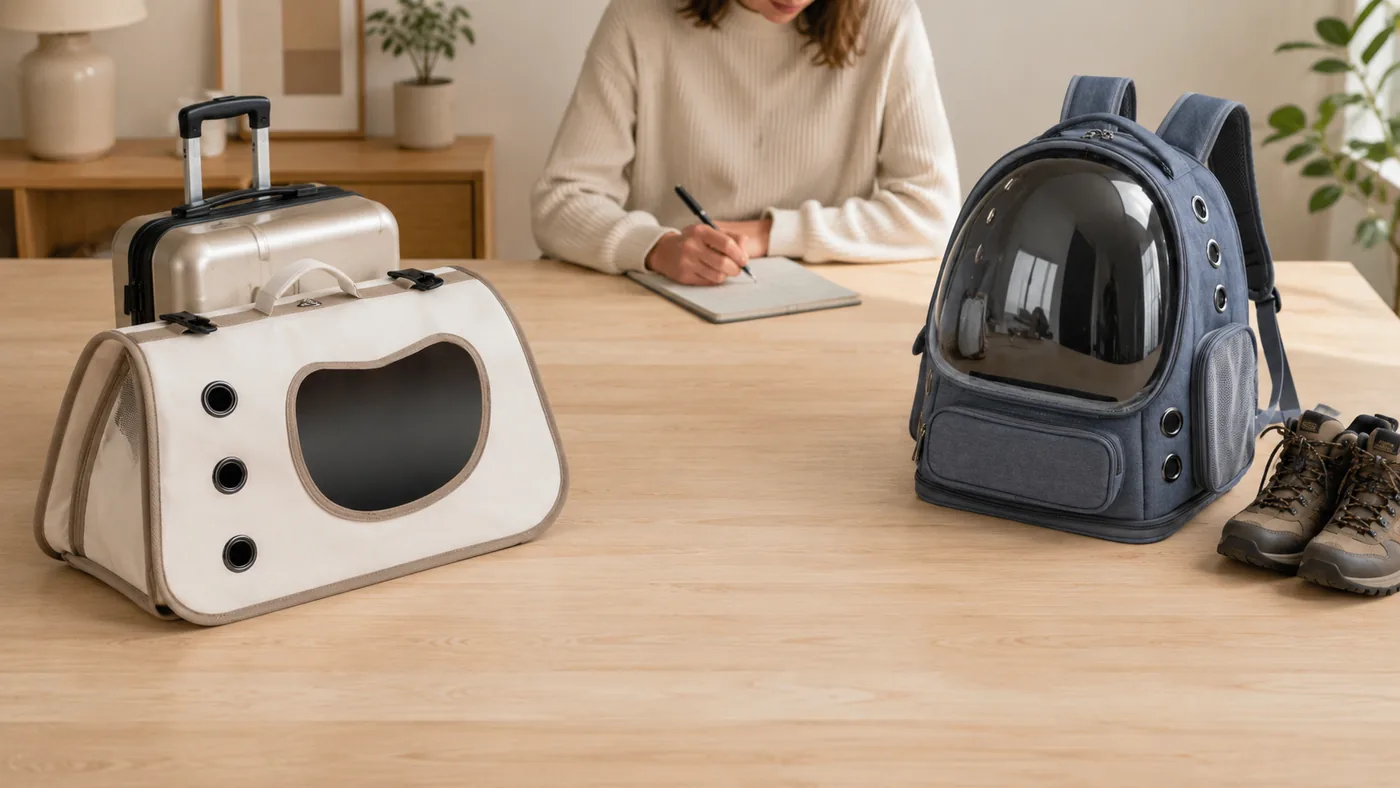
We sell two soft carriers and nothing else: a bubble backpack for walking, and a shoulder bag sized for the cabin. This page is here to tell you which one you need — including when the answer is neither.
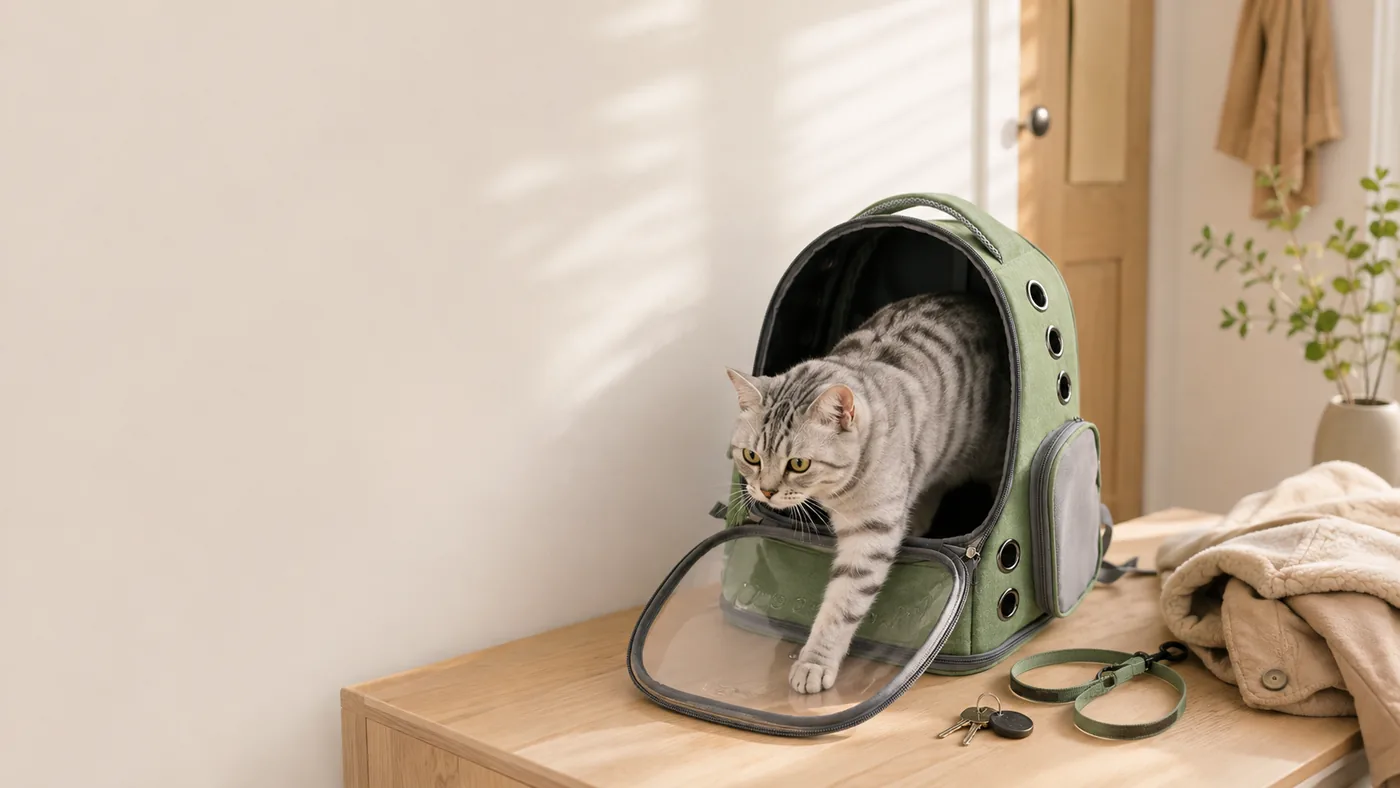
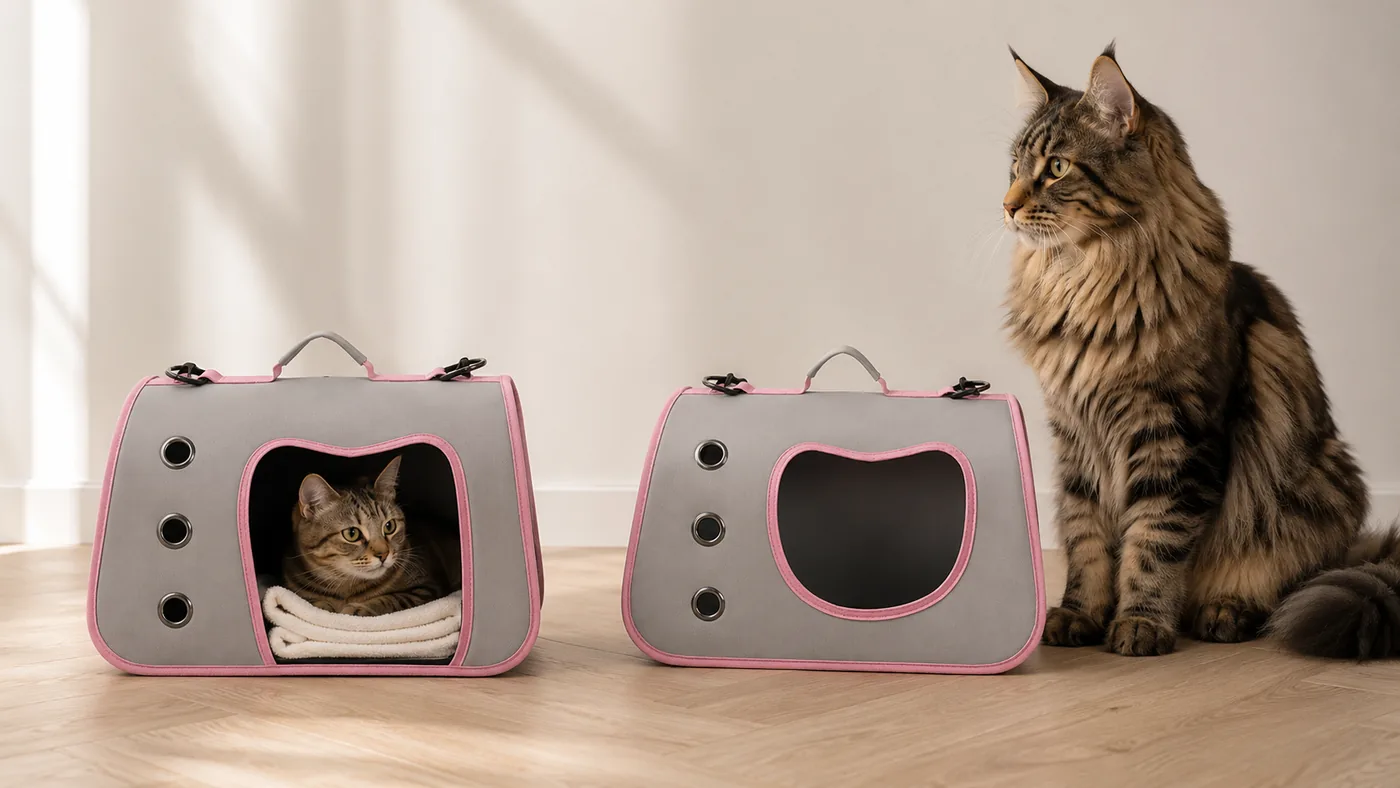
Which of the two, in one paragraph
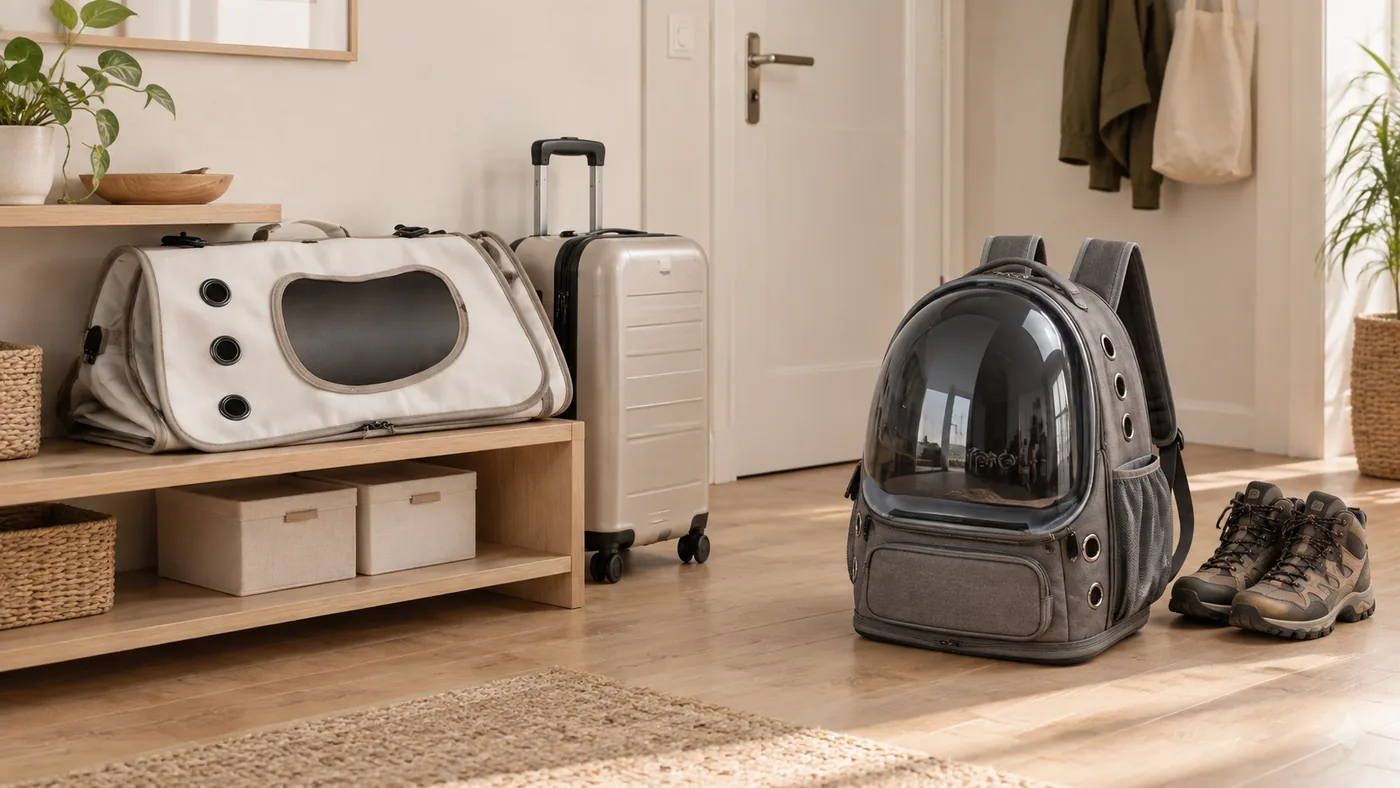
That is the whole decision, and it is about your journey rather than your cat. The table below is the same thing with the numbers attached.
Roambury soft carriers
- Yes — flat, under a bed
- Where the airline allows cats at all
- Mesh or vents on more than one side
- Backpack model, both shoulders
- Up to about 7 kg
A traditional hard-sided carrier
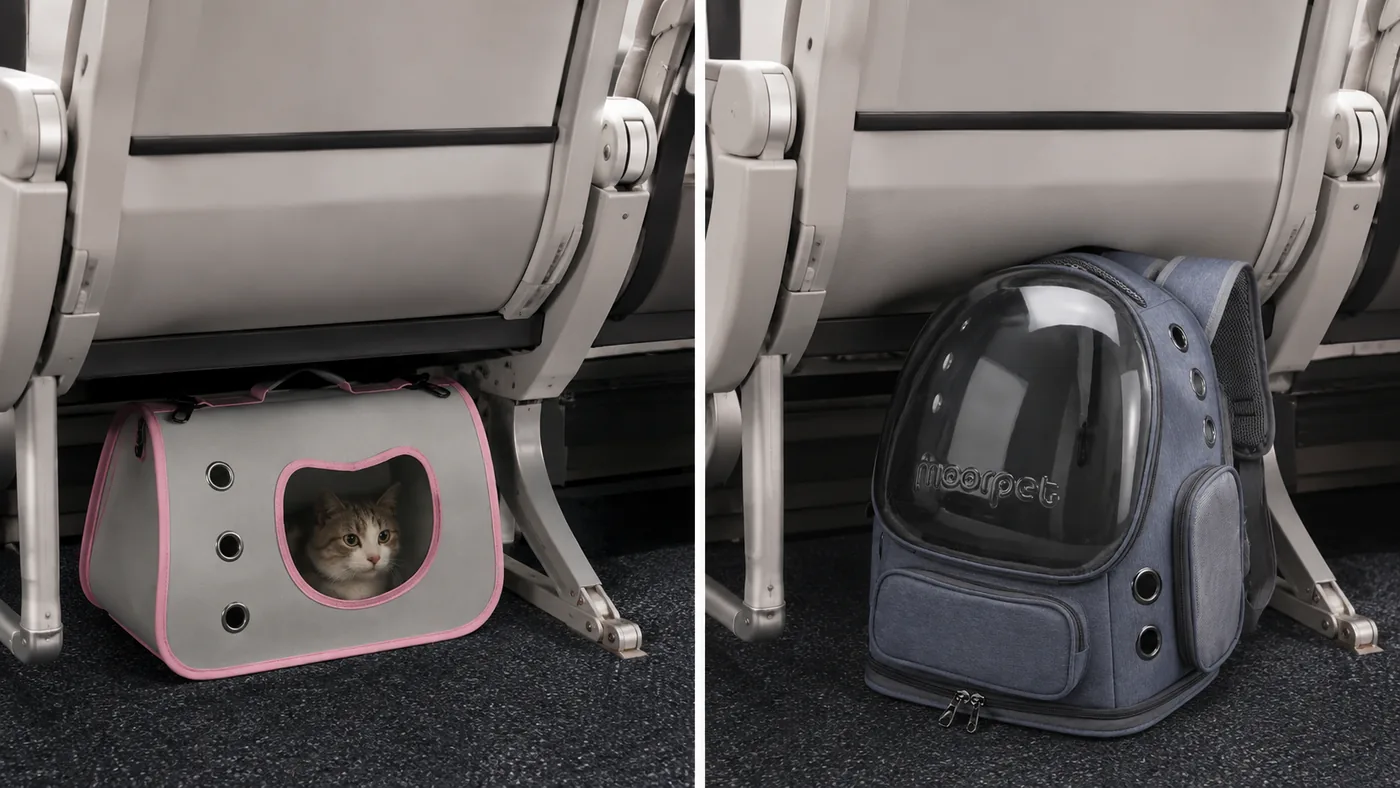
- No, it stays a box
- Refused by Air Canada since June 2025
- Grille on one face
- One hand, at arm’s length
- Larger cats, no upper limit
⚠️ We sell no hard-sided carrier. Read that column as what we are not, and as the line where our two carriers stop: above about 7 kg, a soft base flexes.
Which airlines take cats in the cabin, and at what size
Three of the major airlines across the countries we ship to carry cats as freight only, never in the cabin. The two that do allow them each publish a maximum size.
the widest carrier Virgin Australia allows in the cabin — the full limit is 44 × 26 × 28 cm, 8 kg including the cat
— Virgin Australia, pets in cabin, 2026
the tallest carrier Air Canada allows on most mainline jets — 43 × 40 × 20 cm in full. It publishes three sizes by aircraft type, not one; regional aircraft get 55 × 40 × 27. Soft-sided mandatory since 1 June 2025
— Air Canada, travelling with your pet, 2026
cats accepted in the cabin by British Airways, Qantas or Air New Zealand — freight only
— Airline pet policies, 2026
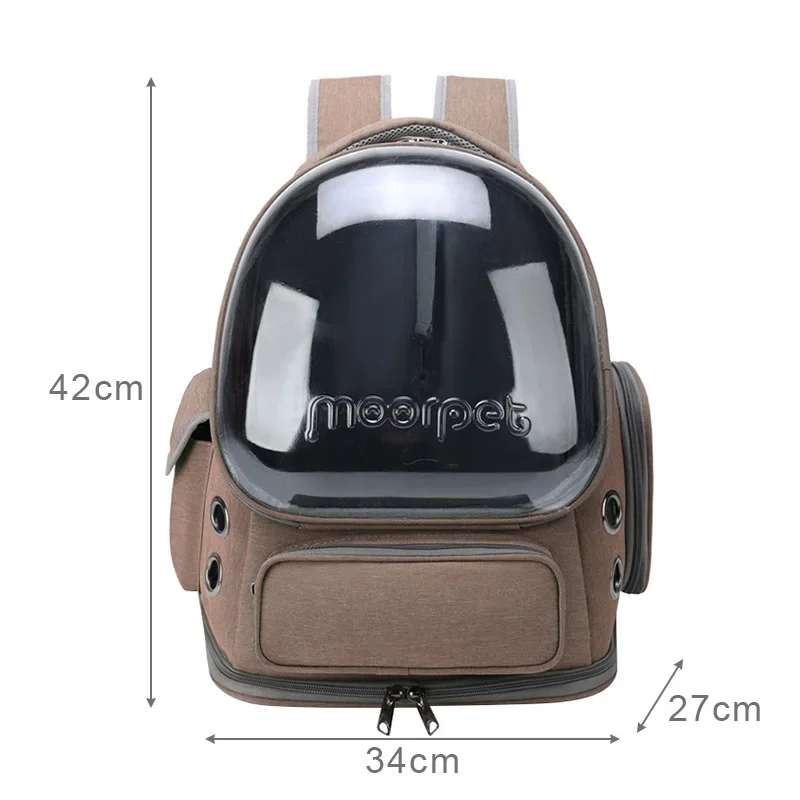
Our shoulder bag measures 40 × 26 × 22 cm: it fits Virgin Australia, and it fits Air Canada on regional aircraft but is 2 cm too tall for the mainline jets. Our backpack measures 42 × 34 × 27 cm: it is 8 cm too wide for Virgin Australia, and Air Canada does not accept backpack carriers with hard plastic windows in the cabin at any size.
⚠️ The shoulder bag is 26 cm wide against Virgin Australia’s 26 cm limit — an equality, not a margin. Virgin asks on its own page that you measure the carrier yourself at its widest point, because published measurements often differ from the actual article. The full table, aircraft by aircraft.
⛔ We do not describe any carrier as “airline approved”. No airline approves a model in general; it publishes an envelope and a weight. We give ours, and you check them against the airline you are actually flying.
Questions people actually ask
Do cats prefer hard or soft carriers?
Neither, as a rule — what a cat reacts to is space, air and familiarity, not the shell. A soft carrier gives more to press against and folds away between trips, which matters if the carrier only comes out for vet visits. A hard one protects better in a car boot. If you fly, the decision is made for you: Air Canada has required soft-sided carriers in the cabin since 1 June 2025.
What cat carriers do vets recommend?
Veterinary organisations recommend criteria, not brands. Cats Protection and the PDSA both advise a carrier that opens from the top as well as the front, so a cat can be lowered in rather than pushed, and one large enough to stand up, turn around and lie down flat. That last phrase is also the wording airlines use. We publish our dimensions so you can check them against it yourself.
Do vets recommend cat backpacks?
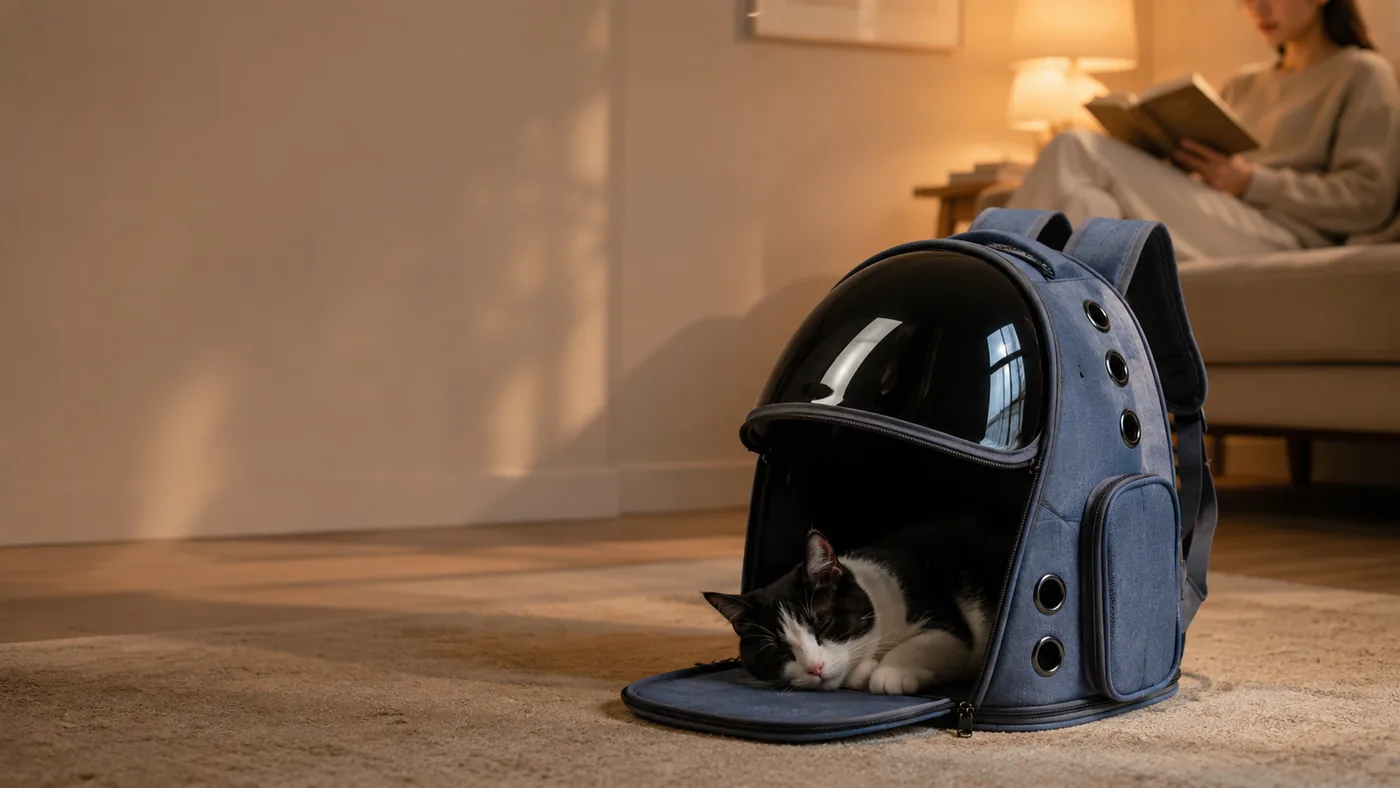
There is no blanket veterinary position for or against them. The advice that does exist is about the cat rather than the bag: a backpack suits a cat already used to being carried, on trips short enough that it will not need a litter tray, with enough ventilation on more than one side. A cat that panics on a five-minute walk will not settle on a longer one, and that shows on the first outing.
Are soft carriers ok for cats?
Yes, and for cabin air travel they are increasingly the only option accepted. What matters is that the base stays flat under the cat rather than sagging, and that the sides do not collapse inwards when the bag is carried. Our shoulder bag is rated by its maker for cats up to about 5 to 7 kg. Beyond that the base flexes.
Do cats like being carried in a backpack?
Some do, some never will, and you find out quickly. Cats that already tolerate being picked up and watching from a window tend to settle. Start with five minutes indoors, bag open on the floor for several days first, then a short walk around the block. If your cat freezes, flattens or vocalises continuously, that is an answer — a shoulder bag carried at hip height is less exposed and suits those cats better.
Which cat carriers do cats prefer?
The one that smells of home. Put a blanket the cat already sleeps on in the base and leave the carrier out as furniture for a week or two before you need it. Cats that only ever see the carrier on the way to the vet learn to associate the two, which is the single most common reason a carrier becomes a fight.
Is flying too stressful for cats?
It depends far more on where the cat travels than on the flight itself. In the cabin, under the seat, with the owner present, most cats settle after take-off. In the hold it is a different experience, and it is worth knowing that this is the only option on several major airlines: British Airways, Qantas and Air New Zealand do not accept cats in the cabin at all. We set out which airlines do, and at what dimensions, on our cabin page.
What is the 3-3-3 rule with cats?
It describes how a newly adopted cat settles: roughly three days to stop hiding, three weeks to learn the routine of the house, three months to feel at home. It is a rule of thumb rather than a study, and it matters here for one reason — a cat still in its first three weeks is not a cat to take on a first outing in a carrier.